Haberler · 6 Kasım 2026
Game Cards From a Mongol Warship
Bir Moğol savaş gemisinden çıkan oyun kartları
Japonya açıklarında, 1281'deki Moğol istilasına ait bir batıkta 29 küçük oyun kartı ve 5 zar bulundu. Askerler savaşı beklerken oyun oynuyordu.
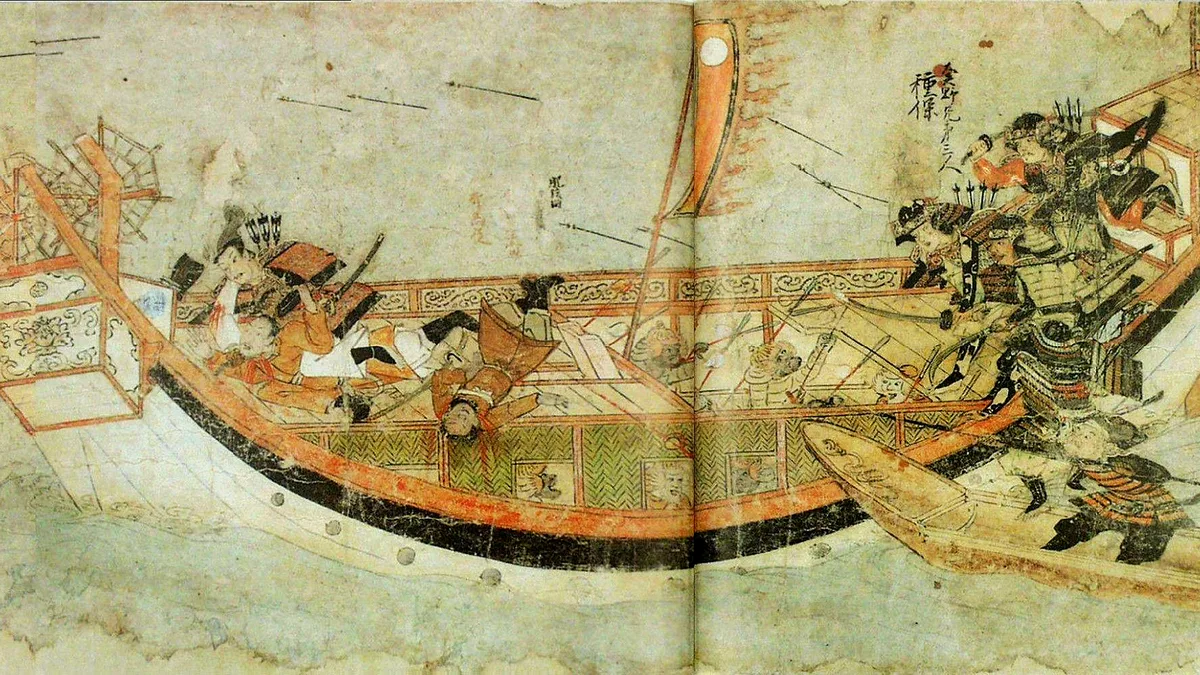
Moğol istilası tomarından bir sahne (13. yüzyıl, Mōko Shūrai Ekotoba) · Fotoğraf: Anonim · Public domain
Level 1 · Başlangıç · A1–A2
Metni dinle
Altı çizili kelimelere dokun!
In 1281, a big from China and Mongolia sailed to Japan in many ships. They wanted to take the country. But a terrible storm many of the ships.
1281'de Çin ve Moğolistan'dan büyük bir ordu pek çok gemiyle Japonya'ya yelken açtı. Bu ada ülkesini ele geçirmek istiyorlardı. Ama korkunç bir fırtına gemilerin çoğunu yok etti.
Today, divers these old ships under the sea near Takashima Island. This year, they found something in one ship.
Bugün dalgıçlar bu eski gemileri Takashima Adası yakınlarında deniz altında keşfediyor. Bu yıl bir gemide eğlenceli bir şey buldular.
They found 29 small playing and 5 ! The cards are from an old Chinese game.
29 küçük oyun kartı ve 5 zar buldular! Kartlar eski bir Çin oyununa ait.
Soldiers on the ship played games when they were . Seven hundred years ago, people liked games too — just like us today!
Gemideki askerler canları sıkıldığında oyun oynuyordu. Yedi yüz yıl önce insanlar da oyunları severdi, tıpkı bugün bizim gibi!
Gramer ipucu
just like
just like + isim: “tıpkı … gibi”. İki şeyin benzerliğini vurgular.
Metinden:
just like us today
Başka örnekler:
- She sings just like her mother.Tıpkı annesi gibi şarkı söylüyor.
- It tastes just like chocolate.Tadı tıpkı çikolata gibi.
Bu metnin kelimeleri
- army isim ordu He joined the army.
- island isim ada Japan is an island country.
- destroy fiil yok etmek The fire destroyed the house.
- explore fiil keşfetmek Let's explore the old town.
- fun sıfat eğlenceli The party was fun.
- card isim kart Let's play cards.
- dice isim zar(lar) Roll the dice!
- bored sıfat canı sıkılmış I'm bored. Let's go out.
Anladın mı? Mini quiz
-
When did the army sail to Japan?
1281'de.
-
What destroyed many of the ships?
Bir fırtına.
-
What did the divers find?
29 kart ve 5 zar.
-
When did the soldiers play games?
Canları sıkıldığında.
Level 2 · Orta · B1
Metni dinle
Altı çizili kelimelere dokun!
In 1281, a huge sent by the Yuan dynasty, the Mongol rulers of China, tried to Japan. The attempt, known as the Battle of Koan, failed after a powerful sank much of the fleet. Many of the ships still lie on the seabed off Takashima Island in Nagasaki Prefecture.
1281'de Çin'in Moğol yöneticileri olan Yuan hanedanının gönderdiği dev bir filo Japonya'yı istila etmeye çalıştı. Koan Savaşı olarak bilinen bu girişim, güçlü bir tayfun filonun büyük kısmını batırınca başarısız oldu. Gemilerin çoğu hâlâ Nagasaki Eyaleti'ndeki Takashima Adası açıklarında deniz tabanında yatıyor.
Underwater archaeologists led by Yoshifumi Ikeda of Kokugakuin University have now found 29 small playing cards and five dice inside one of the . The cards were used for a game called koppai, which came from China and is an of mahjong tiles.
Kokugakuin Üniversitesi'nden Yoshifumi Ikeda liderliğindeki sualtı arkeologları, batıklardan birinin içinde 29 küçük oyun kartı ve beş zar buldu. Kartlar, Çin'den gelen ve mahjong taşlarının atası olan koppai adlı bir oyunda kullanılıyordu.
The ship was about 30 metres long and had living for the crew. Because of its size, the researchers think it may have been the main ship of the fleet. Two other wrecks were found nearby in 2011 and 2015.
Gemi yaklaşık 30 metre uzunluğundaydı ve mürettebat için yaşam bölmeleri vardı. Boyutu nedeniyle araştırmacılar bunun filonun ana gemisi olabileceğini düşünüyor. Yakınlarda 2011 ve 2015'te iki batık daha bulunmuştu.
Most finds from these wrecks are weapons and . The cards and dice are different: they show the everyday life of the soldiers, who probably played games to pass the time during the long .
Bu batıklardan çıkan buluntuların çoğu silah ve teçhizat. Kartlar ve zarlar ise farklı: Muhtemelen uzun yolculuk boyunca vakit geçirmek için oyun oynayan askerlerin gündelik hayatını gösteriyorlar.
Gramer ipucu
to pass the time
pass the time: vakit geçirmek. to + V1 burada amaç bildirir: “… için”.
Metinden:
who probably played games to pass the time
Başka örnekler:
- I read a book to pass the time.Vakit geçirmek için kitap okudum.
- We sang songs to pass the time.Vakit geçsin diye şarkı söyledik.
Bu metnin kelimeleri
- fleet isim filo The fleet sailed at dawn.
- invade fiil istila etmek The army invaded the country.
- typhoon isim tayfun The typhoon hit the coast.
- wreck isim batık, enkaz Divers explored the wreck.
- ancestor isim ata, öncül My ancestors came from Crete.
- quarters isim kalınacak yer, bölme The officers' quarters were small.
- equipment isim teçhizat, ekipman We need new sports equipment.
- voyage isim deniz yolculuğu The voyage took three weeks.
Anladın mı? Mini quiz
-
Who sent the fleet to Japan?
Yuan hanedanı.
-
What sank much of the fleet?
Bir tayfun.
-
Koppai is an ancestor of which game?
Mahjong.
-
Why are the cards and dice special?
Askerlerin gündelik hayatını gösteriyorlar.
Level 3 · İleri · B2
Altı çizili kelimelere dokun!
In 1281, the Yuan dynasty, the Mongol-led empire that ruled China, launched one of the largest naval in pre-modern history against Japan. The campaign, remembered as the Battle of Koan, ended in disaster when a typhoon struck the fleet. Japanese tradition would later call such storms kamikaze, or "divine winds", and the waters off Takashima Island in Nagasaki Prefecture are still with the remains of the failed armada.
1281'de Çin'i yöneten Moğol liderliğindeki imparatorluk olan Yuan hanedanı, Japonya'ya karşı modern öncesi tarihin en büyük deniz istilalarından birini başlattı. Koan Savaşı olarak hatırlanan sefer, bir tayfun filoyu vurunca felaketle sonuçlandı. Japon geleneği daha sonra bu tür fırtınalara kamikaze, yani “ilahi rüzgârlar” diyecekti; Nagasaki Eyaleti'ndeki Takashima Adası açıklarındaki sular hâlâ başarısız armadanın kalıntılarıyla dolu.
A team led by Yoshifumi Ikeda of Kokugakuin University, working with the city of Matsuura, has now reported an unusually personal find from one wreck: 29 small playing cards and five dice. According to the researchers, the cards belonged to koppai, a game that in China and is regarded as a of mahjong tiles. The discovery was first reported by the Mainichi newspaper.
Matsuura şehriyle birlikte çalışan, Kokugakuin Üniversitesi'nden Yoshifumi Ikeda liderliğindeki bir ekip, bir batıktan alışılmadık derecede kişisel bir buluntu bildirdi: 29 küçük oyun kartı ve beş zar. Araştırmacılara göre kartlar, Çin'de ortaya çıkan ve mahjong taşlarının öncülü kabul edilen koppai oyununa aitti. Keşif ilk olarak Mainichi gazetesi tarafından duyuruldu.
The vessel itself is : roughly 30 metres long, with living quarters on board. Its size has led the team to suggest that it may have served as a or mother ship for the fleet. It joins two earlier discoveries in the same area, identified in 2011 and 2015, which together are helping archaeologists understand how the invasion force was built and organised.
Geminin kendisi de büyük: Yaklaşık 30 metre uzunluğunda ve gemide yaşam bölmeleri var. Boyutu, ekibi bunun filonun komuta ya da ana gemisi olarak hizmet etmiş olabileceğini öne sürmeye yöneltti. Gemi, aynı bölgede 2011 ve 2015'te tespit edilen iki önceki keşfe katılıyor; bunlar birlikte arkeologların istila kuvvetinin nasıl inşa edildiğini ve örgütlendiğini anlamasına yardım ediyor.
Most artefacts recovered from these wrecks speak of warfare: weapons, anchors, ceramic bombs. The cards and dice tell a quieter story. They capture the long hours of waiting aboard a crowded ship, when soldiers far from home the time with a familiar game, unaware of the storm that would soon end their .
Bu batıklardan çıkarılan eserlerin çoğu savaşı anlatıyor: silahlar, çapalar, seramik bombalar. Kartlar ve zarlar daha sessiz bir hikâye anlatıyor. Evlerinden uzaktaki askerlerin, kısa süre sonra seferlerini sona erdirecek fırtınadan habersiz, tanıdık bir oyunla vakit öldürdüğü, kalabalık bir gemideki uzun bekleme saatlerini yakalıyorlar.
Gramer ipucu
would + V1: geçmişte gelecek
would + V1, geçmişte anlatılan bir olaydan sonra gerçekleşecek olanı anlatır: “… -ecekti”.
Metinden:
unaware of the storm that would soon end their expedition
Başka örnekler:
- He didn't know he would become famous.Ünlü olacağını bilmiyordu.
- It was a day she would never forget.Asla unutmayacağı bir gündü.
Bu metnin kelimeleri
- invasion isim istila The invasion began in the spring.
- litter fiil (bir yere) saçılmak, doldurmak The beach was littered with plastic.
- originate fiil kökeni …-e dayanmak, ortaya çıkmak Tea originated in China.
- forerunner isim öncül, habercisi This machine was the forerunner of the computer.
- substantial sıfat büyük, önemli ölçüde They made a substantial profit.
- command isim komuta He was in command of the ship.
- while away fiil (phrasal) (vakit) öldürmek, geçirmek We whiled away the afternoon in the garden.
- expedition isim sefer, keşif gezisi They went on an expedition to the Arctic.
Anladın mı? Mini quiz
-
What did Japanese tradition later call such storms?
Kamikaze, yani “ilahi rüzgârlar”.
-
Who first reported the discovery?
Mainichi gazetesi.
-
Why might the ship have been a command ship?
Boyutu nedeniyle.
-
What story do the cards and dice tell?
Gemide beklemenin daha sessiz hikâyesi.