Hikâyeler · Metin 78
The Lost Dog of Moda
Moda'nın kayıp köpeği
Kadıköy'de bütün mahallenin sevdiği sokak köpeği Pasha bir gün ortadan kaybolur. Bir mahalle onu nasıl arar ve sonunda nerede bulur?
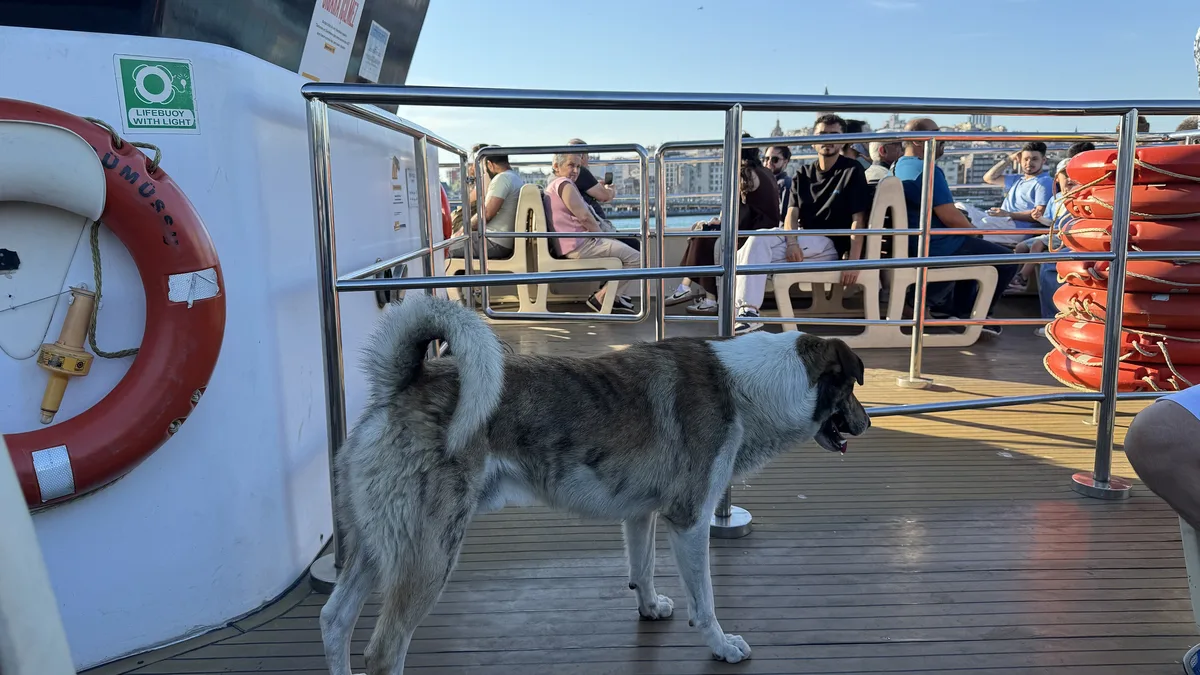
Kadıköy vapurunda bir sokak köpeği (temsilî görsel) · Fotoğraf: Kadı · CC BY 4.0
Level 1 · Başlangıç · A1–A2
Metni dinle
Altı çizili kelimelere dokun!
In Moda, a in Kadıköy, everybody knew Pasha. He was a big, street dog with one white ear.
Kadıköy'de bir semt olan Moda'da herkes Pasha'yı tanırdı. Tek kulağı beyaz, büyük ve dost canlısı bir sokak köpeğiydi.
Every day, the baker gave him bread, the children played with him, and he slept in front of the . He walked with old people to the and waited for them to come back.
Her gün fırıncı ona ekmek verirdi, çocuklar onunla oynardı ve o kitapçının önünde uyurdu. Yaşlı insanlarla vapura kadar yürür, geri dönmelerini beklerdi.
One morning, Pasha was not there. People looked everywhere. They put up and asked on social media. “Has anyone seen Pasha?” Nobody knew where he was.
Bir sabah Pasha ortalıkta yoktu. İnsanlar her yere baktı. Afiş astılar ve sosyal medyada sorular sordular. “Pasha'yı gören var mı?” Kimse nerede olduğunu bilmiyordu.
Three days later, a came from Karaköy, on the other side of the water: “There is a dog with one white ear here. He is waiting at the ferry!” Pasha took the ferry by ! Everyone in Moda cheered when he came home.
Üç gün sonra suyun öbür yakasındaki Karaköy'den bir mesaj geldi: “Burada tek kulağı beyaz bir köpek var. İskelede bekliyor!” Pasha yanlışlıkla vapura binmişti! Eve döndüğünde Moda'daki herkes sevinç çığlıkları attı.
Gramer ipucu
Has anyone seen …?
Present perfect sorusu: Has/Have + özne + V3? Yakın geçmişte olup olmadığını sorar: “… gören var mı?”.
Metinden:
“Has anyone seen Pasha?”
Başka örnekler:
- Have you seen my keys?Anahtarlarımı gördün mü?
- Has anyone called?Arayan oldu mu?
Bu metnin kelimeleri
- neighbourhood isim semt, mahalle It's a nice neighbourhood with lots of parks.
- friendly sıfat dost canlısı, cana yakın Our neighbours are very friendly.
- bookshop isim kitapçı I bought this novel at a small bookshop.
- ferry isim vapur, feribot We took the ferry to the island.
- poster isim afiş, poster There's a poster for the concert on the wall.
- question isim soru I have a question about the homework.
- message isim mesaj I got your message.
- mistake isim hata (by mistake: yanlışlıkla) I took your bag by mistake.
Anladın mı? Mini quiz
-
What was special about Pasha?
Tek kulağı beyazdı.
-
Where did Pasha sleep?
Kitapçının önünde.
-
What did people do when Pasha was lost?
Afiş astılar ve sosyal medyada sordular.
-
How did Pasha get to Karaköy?
Yanlışlıkla vapura bindi.
Level 2 · Orta · B1
Metni dinle
Altı çizili kelimelere dokun!
Every neighbourhood has its characters, and in Moda one of the most famous was Pasha, a large, sandy-coloured street dog with a single white ear. He had no owner, but in a sense he to everyone. The saved him the ends of the bread, the bookseller kept a blanket for him by the door, and schoolchildren about whose turn it was to give him a biscuit.
Her mahallenin kendi tipleri vardır ve Moda'nın en ünlülerinden biri, tek kulağı beyaz, büyük, kum rengi bir sokak köpeği olan Pasha'ydı. Sahibi yoktu ama bir anlamda herkese aitti. Fırıncı ekmeğin uçlarını ona ayırır, kitapçı kapının yanında onun için bir battaniye tutar, okul çocukları ona bisküvi verme sırasının kimde olduğu konusunda tartışırdı.
Pasha also had a strange . Every morning he walked with the commuters down to the ferry pier, watched the boat leave, and then waited patiently for the evening crowd to come back.
Pasha'nın tuhaf bir alışkanlığı da vardı. Her sabah işe gidenlerle birlikte vapur iskelesine kadar yürür, vapurun kalkışını izler, sonra akşam kalabalığının dönüşünü sabırla beklerdi.
Then, one Tuesday, he was gone. By lunchtime, his photo was on every shop window. By the evening, hundreds of people were sharing the search online. People checked parks, and building sites. For two days, there was no news, and the neighbourhood felt strangely .
Sonra bir salı günü ortadan kayboldu. Öğlene kadar fotoğrafı her vitrindeydi. Akşama kadar yüzlerce kişi aramayı internette paylaşıyordu. İnsanlar parklara, veterinerlere ve inşaat alanlarına baktı. İki gün boyunca hiçbir haber yoktu ve mahalle tuhaf bir şekilde boş hissettiriyordu.
On the third morning, a ferry worker in Karaköy posted a photo: a dog with one white ear, sitting at the pier and staring across the water towards Asia. It seemed Pasha had finally followed his people onto the boat, and then could not find his way back. That evening, a small crowd was waiting at Moda pier when the ferry arrived. Pasha walked off as if nothing had happened, and went straight to the bookshop for a .
Üçüncü sabah Karaköy'de bir vapur çalışanı bir fotoğraf paylaştı: İskelede oturmuş, suyun öbür yakasına, Asya'ya doğru bakan, tek kulağı beyaz, şaşkın bir köpek. Görünüşe göre Pasha sonunda insanlarının peşinden vapura binmiş, sonra da dönüş yolunu bulamamıştı. O akşam vapur geldiğinde Moda iskelesinde küçük bir kalabalık bekliyordu. Pasha hiçbir şey olmamış gibi vapurdan indi ve doğruca kestirmek için kitapçıya gitti.
Gramer ipucu
It seemed …
It seemed (that) …: “Görünüşe göre …, anlaşılan …”. Kesin olmayan bir çıkarımı anlatır.
Metinden:
It seemed Pasha had finally followed his people onto the boat
Başka örnekler:
- It seemed nobody was at home.Görünüşe göre evde kimse yoktu.
- It seems that the shop is closed.Anlaşılan dükkân kapalı.
Bu metnin kelimeleri
- belong to fiil -e ait olmak This bag belongs to my sister.
- baker isim fırıncı The baker opens his shop at five.
- argue fiil tartışmak, atışmak My brothers always argue about football.
- habit isim alışkanlık He has a habit of being late.
- vet isim veteriner We took the cat to the vet.
- empty sıfat boş The streets were empty at night.
- confused sıfat şaşkın, kafası karışık I'm confused – can you explain again?
- nap isim kestirme, şekerleme Grandpa takes a nap after lunch.
Anladın mı? Mini quiz
-
Who did Pasha belong to?
Bir anlamda herkese.
-
What was Pasha's strange habit?
İşe gidenleri vapura kadar yürütüp beklemek.
-
Who found Pasha?
Karaköy'de bir vapur çalışanı.
-
What did Pasha do when he came back?
Kestirmek için kitapçıya gitti.
Level 3 · İleri · B2
Metni dinle
Altı çizili kelimelere dokun!
Istanbul's street dogs occupy an place: ownerless yet rarely unclaimed. In Moda, the most celebrated of them was Pasha, a , sand-coloured animal distinguished by a single white ear and a temperament of unshakeable calm. He belonged to no one and therefore, in the logic of the neighbourhood, to everyone. The baker set aside the heels of the loaves, the bookseller kept a folded blanket by the door, and generations of schoolchildren had learned to read beside his sleeping bulk.
İstanbul'un sokak köpekleri belirsiz bir konumdadır: sahipsizdirler ama nadiren kimsesizdirler. Moda'da bunların en ünlüsü, tek beyaz kulağı ve sarsılmaz bir sükûnet mizacıyla ayırt edilen, iri yarı, kum rengi bir hayvan olan Pasha'ydı. Kimseye ait değildi ve bu yüzden, mahallenin mantığına göre, herkese aitti. Fırıncı somunların uçlarını ayırır, kitapçı kapının yanında katlanmış bir battaniye tutardı; kuşaklar boyu okul çocukları onun uyuyan iri gövdesinin yanında okumayı öğrenmişti.
Pasha's one was the ferry. Each morning he escorted the commuters to the pier, watched the boat pull away towards the European shore and then kept vigil until the evening crowds returned. It was a ritual so reliable that his sudden absence one Tuesday registered almost .
Pasha'nın tek tuhaflığı vapurdu. Her sabah işe gidenlere iskeleye kadar eşlik eder, vapurun Avrupa yakasına doğru açılışını izler, sonra akşam kalabalıkları dönene kadar nöbet tutardı. Bu öyle güvenilir bir ritüeldi ki bir salı günü aniden ortadan kaybolması neredeyse anında fark edildi.
What followed was a the neighbourhood would talk about for years. Within hours, his photograph was taped to shop windows; by nightfall, an online appeal had been shared thousands of times. Volunteers combed parks, construction sites and veterinary clinics. For two days the search yielded nothing, and a peculiar gloom settled over the streets.
Ardından mahallenin yıllarca konuşacağı bir seferberlik geldi. Birkaç saat içinde fotoğrafı vitrinlere bantlanmıştı; akşam olduğunda internetteki bir çağrı binlerce kez paylaşılmıştı. Gönüllüler parkları, inşaat alanlarını ve veteriner kliniklerini didik didik aradı. İki gün boyunca aramadan hiçbir sonuç çıkmadı ve sokaklara tuhaf bir kasvet çöktü.
The breakthrough came from across the Bosphorus. A ferry worker in Karaköy shared a photograph of a dog sitting at the pier, gazing steadfastly across the water towards Asia. After years of watching, Pasha had evidently followed his people aboard, only to be on the wrong continent. When he stepped off the evening ferry at Moda to a small, emotional crowd, he accepted their attention with characteristic and walked directly to the bookshop, where his blanket was waiting.
Dönüm noktası Boğaz'ın karşı yakasından geldi. Karaköy'de bir vapur çalışanı, iskelede oturmuş, gözünü ayırmadan suyun öbür yakasına, Asya'ya bakan şaşkın bir köpeğin fotoğrafını paylaştı. Yıllarca izledikten sonra Pasha belli ki insanlarının peşinden vapura binmiş, ama yanlış kıtada mahsur kalmıştı. Akşam vapurundan Moda'da küçük, duygulanmış bir kalabalığın önüne indiğinde ilgiyi kendine has bir kayıtsızlıkla karşıladı ve battaniyesinin beklediği kitapçıya doğru yürüdü.
Gramer ipucu
only to + V1: beklenmedik sonuç
…, only to + V1: Bir eylemin hayal kırıklığı yaratan ya da beklenmedik sonucunu anlatır: “… ama sonunda …”.
Metinden:
Pasha had evidently followed his people aboard, only to be stranded on the wrong continent
Başka örnekler:
- We rushed to the station, only to find the train had left.İstasyona koştuk, ama trenin kalktığını gördük.
- He studied all night, only to fall asleep in the exam.Bütün gece çalıştı, ama sınavda uyuyakaldı.
Bu metnin kelimeleri
- ambiguous sıfat belirsiz, iki anlamlı His answer was ambiguous.
- hulking sıfat iri yarı, cüsseli A hulking man stood at the door.
- eccentricity isim tuhaflık, acayiplik Wearing two hats was one of his eccentricities.
- instantly zarf anında She recognised him instantly.
- mobilisation isim seferberlik The earthquake led to a huge mobilisation of volunteers.
- bewildered sıfat şaşkın, afallamış The tourists looked bewildered by the map.
- stranded sıfat mahsur kalmış We were stranded at the airport for a day.
- indifference isim kayıtsızlık, ilgisizlik He treated the news with indifference.
Anladın mı? Mini quiz
-
How does the writer describe Istanbul's street dogs?
Sahipsiz ama nadiren kimsesiz.
-
Why was Pasha's absence noticed almost instantly?
Vapur ritüeli çok güvenilirdi.
-
What did volunteers search?
Parklar, inşaat alanları ve veteriner klinikleri.
-
How did Pasha react to the crowd?
Kayıtsızlıkla karşıladı.