Günlük Hayat · Metin 66
How to Write a Polite Email in English
İngilizcede kibar bir e-posta nasıl yazılır?
“I want…” yerine “Could you…?” Selamlama, rica, kapanış: İngilizce e-postada kaba görünmemenin küçük ama önemli kuralları.
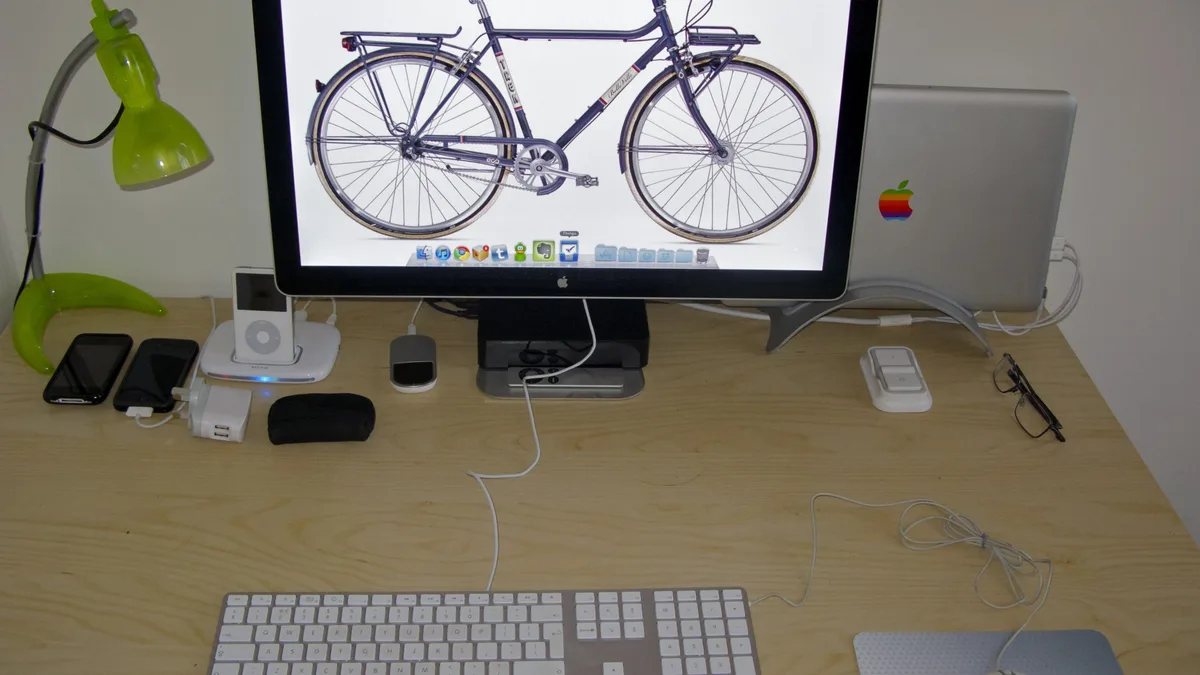
Bir çalışma masası (temsilî görsel) · Fotoğraf: David Wellbeloved · CC BY 2.0
Level 1 · Başlangıç · A1–A2
Metni dinle
Altı çizili kelimelere dokun!
Writing an email in English can be . Your English may be correct, but your email can still sound . Here are some simple .
İngilizce e-posta yazmak zor olabilir. İngilizcen doğru olabilir ama e-postan yine de kaba görünebilir. İşte bazı basit kurallar.
Start with a : “Dear Ms Smith,” or “Hi Tom,”. Then say thank you or ask a friendly question: “I hope you are well.”
Bir selamlamayla başla: “Dear Ms Smith,” ya da “Hi Tom,”. Sonra teşekkür et ya da samimi bir soru sor: “Umarım iyisinizdir.”
Don't write “I want the report.” It sounds too . Write “Could you send me the report, please?” Small words like could, would and please make a big .
“Raporu istiyorum.” diye yazma. Çok doğrudan görünür. “Raporu bana gönderebilir misiniz, lütfen?” diye yaz. could, would ve please gibi küçük kelimeler büyük fark yaratır.
At the end, write a short , like “Best wishes,” or “Kind regards,” and your name. And always your email before you send it!
Sonunda “Best wishes,” ya da “Kind regards,” gibi kısa bir kapanış ve adını yaz. Ve göndermeden önce e-postanı her zaman kontrol et!
Gramer ipucu
Could you …, please?
Kibar rica: Could you + V1 …, please? “… -ebilir misiniz, lütfen?”. Can you'dan daha kibardır.
Metinden:
Could you send me the report, please?
Başka örnekler:
- Could you open the window, please?Pencereyi açabilir misiniz, lütfen?
- Could you help me with this?Bu konuda bana yardım edebilir misiniz?
Bu metnin kelimeleri
- difficult sıfat zor This exercise is difficult.
- rude sıfat kaba Don't be rude to your teacher.
- rule isim kural Every game has rules.
- greeting isim selamlama “Good morning” is a common greeting.
- direct sıfat doğrudan, dolaysız She is very direct – she always says what she thinks.
- difference isim fark What's the difference between these two phones?
- closing isim kapanış “Best wishes” is a friendly closing.
- check fiil kontrol etmek Check your answers before you finish.
Anladın mı? Mini quiz
-
Why can an email sound rude?
Çok doğrudan olabilir.
-
Which is a greeting?
Dear Ms Smith,
-
Which sentence is more polite?
Could you … please?
-
What should you always do before you send an email?
Kontrol et.
Level 2 · Orta · B1
Metni dinle
Altı çizili kelimelere dokun!
Many Turkish learners write emails with good grammar that still sound a little . The problem is usually not the English, but the . In Turkish, a short, direct request can be perfectly normal; in English, it can sound like an order.
Pek çok Türk öğrenci dilbilgisi iyi olduğu hâlde biraz kaba görünen e-postalar yazar. Sorun genellikle İngilizce değil, üsluptur. Türkçede kısa, doğrudan bir rica tamamen normal olabilir; İngilizcede ise bir emir gibi görünebilir.
The first is softening. Instead of “Send me the file,” write “Could you send me the file when you have a moment?” Instead of “I want to change the date,” try “Would it be possible to change the date?” These phrases give the reader a little space and show .
İlk sır yumuşatmak. “Dosyayı bana gönder.” yerine “Müsait olduğunuzda dosyayı bana gönderebilir misiniz?” diye yaz. “Tarihi değiştirmek istiyorum.” yerine “Tarihi değiştirmek mümkün olur mu?” diye dene. Bu ifadeler okuyana biraz alan tanır ve saygı gösterir.
The second secret is the frame. A email usually has a friendly opening (“Thank you for your quick reply.”), a clear (“I'm writing about next week's meeting.”) and a warm ending (“Thanks in advance for your help.”).
İkinci sır çerçeve. Kibar bir e-postada genellikle samimi bir açılış (“Hızlı cevabınız için teşekkür ederim.”), net bir amaç (“Gelecek haftaki toplantı hakkında yazıyorum.”) ve sıcak bir kapanış (“Yardımınız için şimdiden teşekkürler.”) olur.
Finally, the level of formality to the person. “Dear Dr Brown” and “Kind regards” are safe for someone you don't know. With a colleague you know well, “Hi Anna” and “Best” are fine. When you are not sure, it is better to be a little too formal than too .
Son olarak resmiyet düzeyini kişiye göre ayarla. Tanımadığın biri için “Dear Dr Brown” ve “Kind regards” güvenlidir. İyi tanıdığın bir iş arkadaşıyla “Hi Anna” ve “Best” uygundur. Emin olmadığında biraz fazla resmî olmak, fazla rahat olmaktan iyidir.
Gramer ipucu
Would it be possible to …?
Would it be possible to + V1?: Çok kibar bir rica kalıbıdır: “… mümkün olur mu?”.
Metinden:
Would it be possible to change the date?
Başka örnekler:
- Would it be possible to leave early today?Bugün erken çıkmam mümkün olur mu?
- Would it be possible to get a receipt?Fiş alabilmem mümkün mü?
Bu metnin kelimeleri
- impolite sıfat kaba, nezaketsiz It's impolite to interrupt people.
- tone isim üslup, ton I didn't like the tone of his message.
- secret isim sır What's the secret of your success?
- respect isim saygı We should treat everyone with respect.
- polite sıfat kibar She's always polite to customers.
- purpose isim amaç What is the purpose of your visit?
- match fiil uydurmak, eşleştirmek Match the words with their meanings.
- casual sıfat rahat, gündelik, teklifsiz The party is casual, so wear jeans.
Anladın mı? Mini quiz
-
What is usually the problem in impolite emails, according to the writer?
Üslup.
-
Which phrase is an example of softening?
Would it be possible…?
-
What does a polite email usually have?
Samimi açılış, net amaç ve sıcak kapanış.
-
What should you do when you are not sure about formality?
Biraz fazla resmî ol.
Level 3 · İleri · B2
Metni dinle
Altı çizili kelimelere dokun!
For many learners, the hardest part of writing an email in English has little to do with vocabulary or grammar. It is : the unwritten rules that determine how a message will be received. A request that is perfectly acceptable in Turkish, such as a brief “Dosyayı gönderir misiniz?”, can, when translated word for word, come across in English as or even demanding.
Pek çok öğrenci için İngilizce e-posta yazmanın en zor kısmının kelime bilgisi ya da dilbilgisiyle pek ilgisi yoktur. Zor olan edimbilimdir: bir mesajın nasıl karşılanacağını belirleyen yazılı olmayan kurallar. Türkçede tamamen kabul edilebilir olan kısa bir “Dosyayı gönderir misiniz?” gibi bir rica, kelimesi kelimesine çevrildiğinde İngilizcede ani, hatta talepkâr bir izlenim bırakabilir.
Native speakers tend to requests in several ways. They use modal verbs (“Could you…?”, “Would you mind…?”), add such as “just” and “possibly”, and acknowledge the reader's time: “I know you're very busy, but…”. They also frequently frame requests as questions about possibility rather than statements of need, so “I need the figures by Friday” becomes “Would it be possible to have the figures by Friday?”
Anadili İngilizce olanlar ricaları birkaç yolla yumuşatma eğilimindedir. Kiplik fiiller kullanırlar (“Could you…?”, “Would you mind…?”), “just” ve “possibly” gibi yumuşatıcılar eklerler ve okuyanın zamanını kabul ederler: “Çok meşgul olduğunuzu biliyorum ama…”. Ricaları sıklıkla bir ihtiyaç ifadesi olarak değil, bir olasılık sorusu olarak çerçevelerler; böylece “Rakamlara cumaya kadar ihtiyacım var” cümlesi “Rakamları cumaya kadar almam mümkün olur mu?” olur.
Structure matters as much as phrasing. A email typically opens with a brief pleasantry, states its purpose early, makes one clear request and closes with appreciation. Burying the main point in the third paragraph is a common source of for busy readers.
Yapı da ifade kadar önemlidir. İyi kurgulanmış bir e-posta genellikle kısa bir nezaket cümlesiyle açılır, amacını erkenden belirtir, tek ve net bir ricada bulunur ve teşekkürle kapanır. Ana noktayı üçüncü paragrafa gömmek, meşgul okuyucular için yaygın bir hayal kırıklığı kaynağıdır.
Finally, should match the relationship. “Dear Professor Allen” and “Kind regards” are a safe default with strangers; “Hi Mark” and “Cheers” suit a familiar colleague. When in doubt, erring on the side of formality is rarely penalised, whereas excessive can undermine an otherwise excellent message.
Son olarak dil düzeyi ilişkiye uygun olmalıdır. Yabancılarla “Dear Professor Allen” ve “Kind regards” güvenli bir varsayılandır; “Hi Mark” ve “Cheers” ise tanıdık bir iş arkadaşına uyar. Şüphede kalındığında resmiyetten yana hata yapmak nadiren cezalandırılır; aşırı teklifsizlik ise aksi hâlde mükemmel olan bir mesajı zayıflatabilir.
Gramer ipucu
has little to do with …
have little/nothing to do with …: “… ile pek/hiç ilgisi olmamak”.
Metinden:
the hardest part of writing an email in English has little to do with vocabulary or grammar
Başka örnekler:
- Success has little to do with luck.Başarının şansla pek ilgisi yoktur.
- This has nothing to do with you.Bunun seninle hiçbir ilgisi yok.
Bu metnin kelimeleri
- pragmatics isim edimbilim (dilin kullanım kuralları) Pragmatics studies how context affects meaning.
- abrupt sıfat ani, sert, kaba His abrupt reply surprised me.
- cushion fiil yumuşatmak She tried to cushion the bad news.
- hedge isim yumuşatıcı ifade, kaçamak “Perhaps” is a common hedge.
- well-crafted sıfat iyi kurgulanmış, özenle hazırlanmış It was a well-crafted speech.
- frustration isim hayal kırıklığı, bıkkınlık I understand your frustration.
- register isim dil düzeyi, üslup (resmî/gayriresmî) Use a formal register in a job application.
- informality isim teklifsizlik, resmî olmama I like the informality of this café.
Anladın mı? Mini quiz
-
What is the hardest part of writing an email, according to the writer?
Edimbilim.
-
Which of these is a hedge?
just
-
What frustrates busy readers?
Ana noktayı üçüncü paragrafa gömmek.
-
What happens if you are too informal?
Mükemmel bir mesajı zayıflatabilir.