Günlük Hayat · Metin 70
Speaking English on the Phone
İngilizce telefonda konuşmak
Yüz yok, el kol hareketi yok, sadece ses. İngilizce telefon konuşmalarını kolaylaştıran hazır kalıplar ve küçük taktikler.
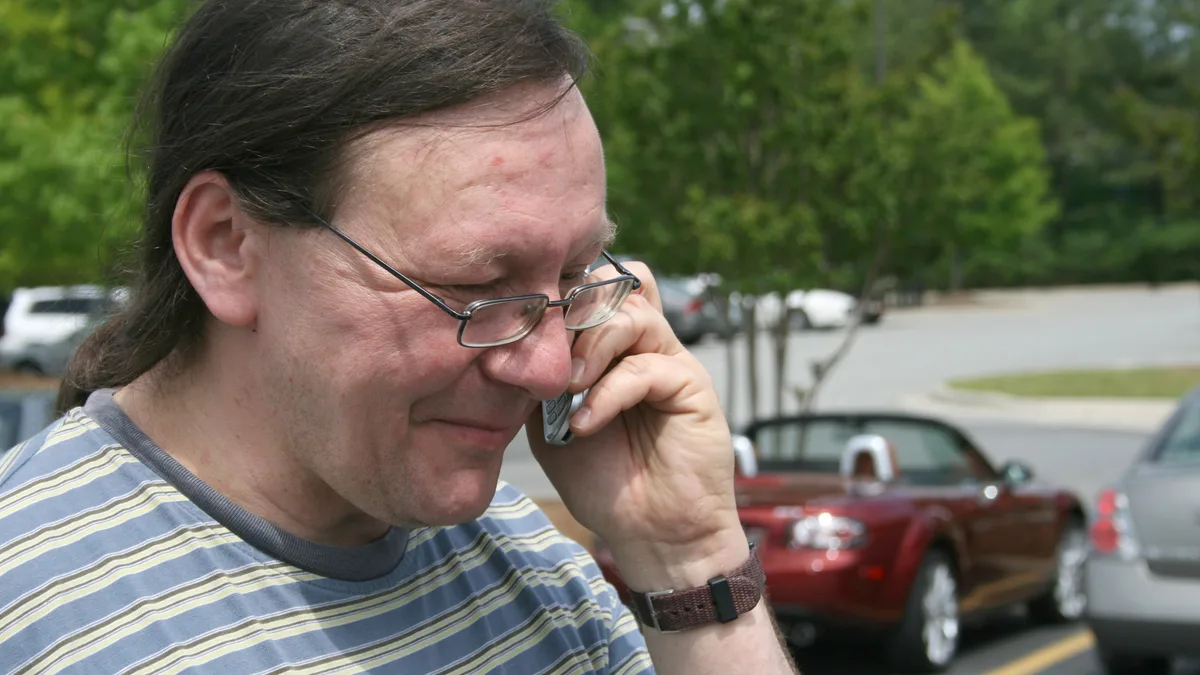
Telefonda konuşan bir adam (temsilî görsel) · Fotoğraf: Ildar Sagdejev (Specious) · CC BY-SA 4.0
Level 1 · Başlangıç · A1–A2
Metni dinle
Altı çizili kelimelere dokun!
Many learners say, “I can speak English, but on the phone I !” This is very normal. On the phone, you can't see the other person's face or hands. You only have their .
Pek çok öğrenci “İngilizce konuşabiliyorum ama telefonda paniğe kapılıyorum!” der. Bu çok normal. Telefonda karşındakinin yüzünü ya da ellerini göremezsin. Sadece sesi vardır.
Here are some useful phrases. To start: “Hello, this is Ayşe. Can I speak to Mr Brown, please?” If you don't understand: “Sorry, could you say that again, please?” or “Could you speak more , please?”
İşte bazı faydalı ifadeler. Başlamak için: “Merhaba, ben Ayşe. Bay Brown ile görüşebilir miyim, lütfen?” Anlamazsan: “Pardon, tekrar söyler misiniz, lütfen?” ya da “Daha yavaş konuşabilir misiniz, lütfen?”
Names and numbers are . Ask the person to the name: “How do you spell that?” Then the number to check it.
İsimler ve numaralar zordur. Kişiden ismi kodlamasını iste: “Bunu nasıl yazıyorsunuz?” Sonra kontrol etmek için numarayı tekrarla.
Before an important call, write down your questions. And don't be to ask again. It's better to ask than to .
Önemli bir aramadan önce sorularını yaz. Ve tekrar sormaktan korkma. Tahmin etmektense sormak daha iyidir.
Gramer ipucu
It's better to … than to …
It's better to + V1 than (to) + V1: “… -mektense … -mek daha iyidir”.
Metinden:
It's better to ask than to guess
Başka örnekler:
- It's better to be early than to be late.Geç kalmaktansa erken olmak daha iyidir.
- It's better to walk than to wait for the bus.Otobüsü beklemektense yürümek daha iyi.
Bu metnin kelimeleri
- panic fiil paniğe kapılmak Don't panic – everything is fine.
- voice isim ses (insan sesi) She has a beautiful voice.
- slowly zarf yavaşça Please speak slowly.
- difficult sıfat zor Chinese is a difficult language.
- spell fiil harf harf söylemek, hecelemek Can you spell your surname?
- repeat fiil tekrarlamak Repeat after me.
- afraid sıfat korkmuş (be afraid to: -mekten korkmak) Don't be afraid to make mistakes.
- guess fiil tahmin etmek Guess what happened today!
Anladın mı? Mini quiz
-
Why is speaking on the phone difficult?
Sadece sesi duyabilirsin.
-
What can you say if you don't understand?
Could you say that again, please?
-
What should you do with a number?
Kontrol için tekrarla.
-
What does the writer say is better?
Tahmin etmektense sormak.
Level 2 · Orta · B1
Metni dinle
Altı çizili kelimelere dokun!
Even learners who speak English well often feel nervous on the phone. There is a simple reason: in a face-to-face conversation, we get a lot of help from expressions, and lip movements. On the phone, all of that disappears, and the sound quality is often poor.
İngilizceyi iyi konuşan öğrenciler bile telefonda çoğu zaman gergin hisseder. Bunun basit bir nedeni var: Yüz yüze bir konuşmada yüz ifadelerinden, jestlerden ve dudak hareketlerinden çok yardım alırız. Telefonda bunların hepsi kaybolur ve ses kalitesi de çoğu zaman kötüdür.
The good news is that phone calls are quite . Most follow a pattern, and a handful of ready-made phrases can carry you through. To open: “Hi, this is Mert from ABC Travel. I'm calling about my booking.” To : “Sorry, the line's not very good. Could you repeat that?” To check: “So that's Tuesday at three, is that right?”
İyi haber şu ki telefon görüşmeleri oldukça tahmin edilebilir. Çoğu bir kalıbı izler ve bir avuç hazır ifade seni idare edebilir. Açmak için: “Merhaba, ben ABC Travel'dan Mert. Rezervasyonum hakkında arıyorum.” Netleştirmek için: “Pardon, hat pek iyi değil. Tekrar eder misiniz?” Kontrol etmek için: “Yani salı saat üç, doğru mu?”
Names, numbers and email addresses cause the most problems. Don't be to ask someone to spell a word, and use examples when you spell: “B for Bravo, D for Delta.” Always read numbers back to confirm them.
İsimler, numaralar ve e-posta adresleri en çok soruna yol açar. Birinden bir kelimeyi kodlamasını istemekten utanma ve kodlarken örnekler kullan: “Bravo'nun B'si, Delta'nın D'si.” Numaraları teyit etmek için her zaman geri oku.
Finally, prepare. Before an important call, what you want to say and the questions you need to ask. Having a short in front of you can reduce your stress and make you sound much more .
Son olarak hazırlan. Önemli bir aramadan önce ne söylemek istediğini ve sorman gereken soruları not al. Önünde kısa bir metin olması stresini azaltabilir ve sesinin çok daha özgüvenli çıkmasını sağlayabilir.
Gramer ipucu
Question tag: …, is that right?
Bir bilgiyi teyit etmek için cümlenin sonuna is that right? / isn't it? gibi kısa sorular ekleriz: “… değil mi?”.
Metinden:
So that's Tuesday at three, is that right?
Başka örnekler:
- Your flight is at nine, is that right?Uçuşun dokuzda, değil mi?
- You're from Izmir, aren't you?İzmirlisin, değil mi?
Bu metnin kelimeleri
- facial sıfat yüze ait (facial expression: yüz ifadesi) His facial expression showed he was angry.
- gesture isim jest, el kol hareketi She made a gesture to come in.
- predictable sıfat tahmin edilebilir The ending of the film was predictable.
- clarify fiil netleştirmek, açıklığa kavuşturmak Could you clarify what you mean?
- embarrassed sıfat utanmış, mahcup I was embarrassed by my mistake.
- note down fiil not almak Note down your password somewhere safe.
- script isim metin, senaryo The actor forgot his script.
- confident sıfat özgüvenli, emin She feels confident about the exam.
Anladın mı? Mini quiz
-
Why do even good speakers feel nervous on the phone?
Yüz ifadelerini ve jestleri göremezler.
-
Which phrase is used to check information?
So that's Tuesday at three, is that right?
-
How can you make spelling clearer?
“B for Bravo” gibi örnekler kullan.
-
What can a short script do?
Stresi azaltır ve özgüvenli görünmeni sağlar.
Level 3 · İleri · B2
Metni dinle
Altı çizili kelimelere dokun!
For many second-language speakers, the telephone is a uniquely place. Learners who can hold their own in a meeting or a café may find their confidence evaporating the moment a call connects. The reason is not simply nerves. In face-to-face interaction, listeners draw on a wealth of visual cues, including lip movements, facial expressions and gestures, to what they hear. A phone call strips these away and often adds compression, background noise and a slight delay.
Pek çok ikinci dil konuşucusu için telefon benzersiz biçimde göz korkutucu bir yerdir. Bir toplantıda ya da bir kafede kendini idare edebilen öğrenciler, arama bağlandığı anda özgüvenlerinin buharlaştığını görebilir. Bunun nedeni yalnızca gerginlik değil. Yüz yüze etkileşimde dinleyiciler, duyduklarındaki belirsizliği gidermek için dudak hareketleri, yüz ifadeleri ve jestler gibi zengin görsel ipuçlarından yararlanır. Telefon görüşmesi bunları ortadan kaldırır ve çoğu zaman sıkıştırma, arka plan gürültüsü ve hafif bir gecikme ekler.
Fortunately, phone calls are among the most forms of spoken interaction. Openings, transfers, requests and closings follow highly conventional patterns, which means a modest of phrases goes a long way. Identifying yourself and your purpose immediately (“Hello, it's Selin Kaya from the Ankara office; I'm calling about invoice 2047”) orients the listener and reduces the chance of misunderstanding.
Neyse ki telefon görüşmeleri sözlü etkileşimin en kalıplaşmış biçimleri arasındadır. Açılışlar, aktarmalar, ricalar ve kapanışlar son derece yerleşik kalıpları izler; bu da mütevazı bir ifade dağarcığının çok işe yarayacağı anlamına gelir. Kendinizi ve amacınızı hemen belirtmek (“Merhaba, Ankara ofisinden Selin Kaya; 2047 numaralı fatura hakkında arıyorum”) dinleyiciyi yönlendirir ve yanlış anlaşılma olasılığını azaltır.
Equally important are repair strategies. Rather than pretending to understand, effective speakers problems early and specifically: “Sorry, I didn't catch the last part. Was that the fifteenth or the fiftieth?” Confirming key details by reading them back, and using a phonetic alphabet for names and codes, removes much of the that causes costly errors.
Onarım stratejileri de aynı derecede önemlidir. Etkili konuşucular anlıyormuş gibi yapmak yerine sorunları erkenden ve net biçimde belirtir: “Pardon, son kısmı kaçırdım. On beşi mi dediniz, elliyi mi?” Önemli ayrıntıları geri okuyarak teyit etmek ve isimler ile kodlar için fonetik bir alfabe kullanmak, maliyetli hatalara yol açan tahmin yürütmenin büyük kısmını ortadan kaldırır.
Preparation completes the picture. Jotting down the purpose of the call, the questions to ask and a few responses turns an unpredictable conversation into a familiar routine. It does not make the phone , but it makes it manageable.
Hazırlık tabloyu tamamlar. Aramanın amacını, sorulacak soruları ve beklenen birkaç cevabı not etmek, öngörülemeyen bir konuşmayı tanıdık bir rutine dönüştürür. Bu, telefonu zahmetsiz hâle getirmez ama yönetilebilir kılar.
Gramer ipucu
Rather than + V-ing
Rather than + V-ing, bir davranış yerine başka birini tercih etmeyi anlatır: “… -mek yerine”.
Metinden:
Rather than pretending to understand, effective speakers signal problems early
Başka örnekler:
- Rather than complaining, try to find a solution.Şikâyet etmek yerine bir çözüm bulmaya çalış.
- I took the train rather than driving.Araba kullanmak yerine trene bindim.
Bu metnin kelimeleri
- daunting sıfat göz korkutucu, yıldırıcı Starting a new job can be daunting.
- disambiguate fiil belirsizliği gidermek Context helps us disambiguate words with two meanings.
- formulaic sıfat kalıplaşmış, formüle dayalı Business letters are often formulaic.
- repertoire isim dağarcık, repertuvar She has a wide repertoire of songs.
- signal fiil belirtmek, işaret etmek He signalled that he was ready.
- guesswork isim tahmin yürütme, kestirme The plan was based on guesswork.
- anticipated sıfat beklenen, öngörülen The anticipated rise in prices didn't happen.
- effortless sıfat zahmetsiz She makes dancing look effortless.
Anladın mı? Mini quiz
-
What do listeners use in face-to-face interaction to understand better?
Görsel ipuçları.
-
Why does a modest repertoire of phrases go a long way?
Telefon görüşmeleri yerleşik kalıpları izler.
-
What do effective speakers do instead of pretending to understand?
Sorunları erkenden ve net belirtirler.
-
What does preparation do, according to the writer?
Yönetilebilir kılar.