Günlük Hayat · Metin 68
The Art of Saying No
Hayır deme sanatı
Her şeye “evet” demek bizi yorar. İngilizcede kibarca ama net bir şekilde hayır demenin yolları ve hazır kalıplar.
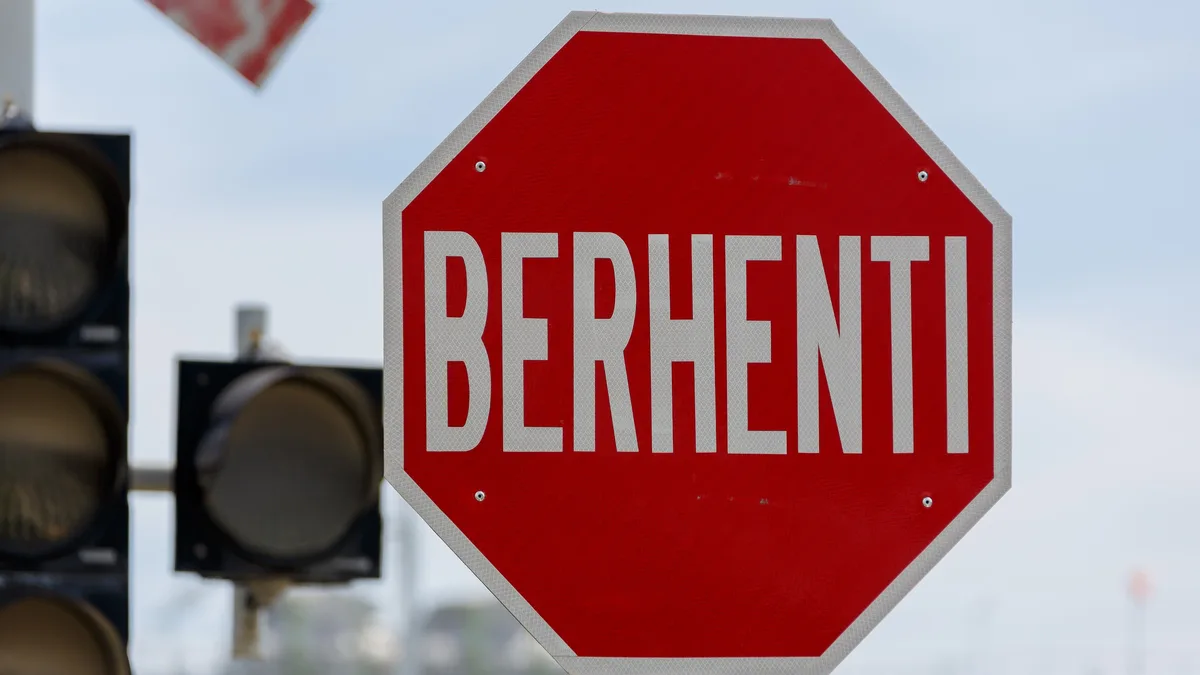
Malezya'da bir “dur” tabelası (temsilî görsel) · Fotoğraf: CEphoto, Uwe Aranas · CC BY-SA 3.0
Level 1 · Başlangıç · A1–A2
Metni dinle
Altı çizili kelimelere dokun!
Do you say yes to everything? Many people do. They don't want to make others . But if you always say yes, you can get very .
Her şeye evet mi diyorsun? Pek çok insan öyle yapar. Başkalarını üzmek istemezler. Ama her zaman evet dersen çok yorulabilirsin.
Saying no is not bad. It can be kind and . Here are some useful in English:
Hayır demek kötü bir şey değil. Nazik ve dürüst olabilir. İşte İngilizcede bazı faydalı cümleler:
“Thanks for asking, but I can't this time.” “I'd love to, but I'm really busy this week.” “Sorry, that doesn't for me.”
“Sorduğun için teşekkürler ama bu sefer yapamam.” “Çok isterdim ama bu hafta gerçekten çok yoğunum.” “Üzgünüm, bu bana uymuyor.”
Keep it short and . You don't need to everything. And remember: when you say no to one thing, you say yes to your own time and .
Kısa ve samimi tut. Her şeyi açıklamak zorunda değilsin. Ve unutma: Bir şeye hayır dediğinde kendi zamanına ve enerjine evet demiş olursun.
Gramer ipucu
I'd love to, but …
I'd love to (= I would love to), bir daveti kibarca reddederken başa konur: “Çok isterdim ama …”.
Metinden:
“I'd love to, but I'm really busy this week.”
Başka örnekler:
- I'd love to come, but I have an exam.Gelmeyi çok isterdim ama sınavım var.
- I'd love to help, but I don't have time.Yardım etmeyi çok isterdim ama vaktim yok.
Bu metnin kelimeleri
- unhappy sıfat mutsuz She looked unhappy at the party.
- tired sıfat yorgun I'm too tired to cook tonight.
- honest sıfat dürüst Please give me an honest answer.
- sentence isim cümle Write a sentence with this word.
- work (for someone) fiil uymak, işine gelmek Does Monday work for you?
- friendly sıfat samimi, cana yakın The people here are very friendly.
- explain fiil açıklamak Can you explain this word?
- energy isim enerji I have no energy today.
Anladın mı? Mini quiz
-
Why do many people say yes to everything?
Başkalarını üzmek istemezler.
-
What can happen if you always say yes?
Çok yorulabilirsin.
-
Which sentence is a polite way to say no?
I'd love to, but…
-
What do you say yes to when you say no?
Kendi zamanına ve enerjine.
Level 2 · Orta · B1
Metni dinle
Altı çizili kelimelere dokun!
A colleague asks you to stay late again. A friend wants help moving house on your only free weekend. You want to , but you hear yourself saying, “Sure, no problem!” If this sounds familiar, you are not alone.
Bir iş arkadaşın yine geç saate kadar kalmanı istiyor. Bir arkadaşın tek boş hafta sonunda taşınmasına yardım etmeni istiyor. Reddetmek istiyorsun ama kendini “Tabii, sorun değil!” derken buluyorsun. Bu tanıdık geliyorsa yalnız değilsin.
Many people find it hard to say no because they worry about others or looking . But constantly saying yes can lead to stress, and less time for the things that really matter to you.
Pek çok insan başkalarını hayal kırıklığına uğratmaktan ya da bencil görünmekten endişelendiği için hayır demekte zorlanır. Ama sürekli evet demek strese, içerlemeye ve senin için gerçekten önemli olan şeylere daha az zaman ayırmaya yol açabilir.
A good “no” is clear, short and warm. You can thank the person, refuse, and, if you like, offer an : “Thanks for thinking of me. I can't help this Saturday, but I could come for an hour on Sunday.” Another useful phrase is “Let me check and get back to you,” which gives you time to think instead of agreeing .
İyi bir “hayır” net, kısa ve sıcaktır. Kişiye teşekkür edebilir, reddedebilir ve istersen bir alternatif sunabilirsin: “Beni düşündüğün için teşekkürler. Bu cumartesi yardım edemem ama pazar günü bir saatliğine gelebilirim.” Bir başka faydalı ifade de “Bir bakayım, sana dönerim”; bu da otomatik olarak kabul etmek yerine sana düşünme zamanı verir.
Try not to give long . The more you explain, the more the other person may try to change your mind. A simple, polite answer is usually more for both of you.
Uzun mazeretler vermemeye çalış. Ne kadar çok açıklarsan karşındaki kişi fikrini değiştirmeye o kadar çok çalışabilir. Basit, kibar bir cevap genellikle ikiniz için de daha saygılıdır.
Gramer ipucu
The more …, the more …
The + karşılaştırma …, the + karşılaştırma …: “Ne kadar çok …, o kadar çok …”.
Metinden:
The more you explain, the more the other person may try to change your mind
Başka örnekler:
- The more you practise, the better you get.Ne kadar çok pratik yaparsan o kadar iyi olursun.
- The sooner we leave, the sooner we arrive.Ne kadar erken çıkarsak o kadar erken varırız.
Bu metnin kelimeleri
- refuse fiil reddetmek He refused to answer the question.
- disappoint fiil hayal kırıklığına uğratmak I don't want to disappoint my parents.
- selfish sıfat bencil Don't be so selfish – share your toys.
- resentment isim içerleme, kırgınlık She felt resentment towards her boss.
- alternative isim alternatif, seçenek Is there an alternative to this plan?
- automatically zarf otomatik olarak, düşünmeden The door opens automatically.
- excuse isim mazeret, bahane He always has an excuse for being late.
- respectful sıfat saygılı Be respectful to older people.
Anladın mı? Mini quiz
-
Why do many people find it hard to say no?
Başkalarını hayal kırıklığına uğratmaktan endişelenirler.
-
What can constantly saying yes lead to?
Stres ve içerleme.
-
What does “Let me check and get back to you” give you?
Düşünme zamanı.
-
Why should you avoid long excuses?
Karşındaki kişi fikrini değiştirmeye çalışabilir.
Level 3 · İleri · B2
Metni dinle
Altı çizili kelimelere dokun!
For many people, “no” is the hardest word in any language. Faced with a request, they feel a powerful pull towards agreement, driven by a desire to be liked, a fear of conflict or a sense that refusing is somehow . Psychologists sometimes describe the extreme version of this as people-pleasing, and its costs are well documented: overcommitment, chronic stress and a quiet of resentment.
Pek çok insan için “hayır” her dilde en zor kelimedir. Bir ricayla karşılaştıklarında, sevilme isteği, çatışma korkusu ya da reddetmenin bir şekilde kabalık olduğu hissiyle güçlü bir kabul etme çekimi hissederler. Psikologlar bazen bunun uç hâlini insanları memnun etme eğilimi olarak tanımlar ve bedelleri iyi belgelenmiştir: aşırı yükümlülük, kronik stres ve sessizce biriken içerleme.
Refusing well is a skill, and like most skills it can be learned. Effective refusals tend to share three features. They are , since delaying an answer often makes it harder to give. They are clear, avoiding phrases like “maybe” that leave the door half open. And they are , acknowledging the request before declining it: “I really appreciate you asking, but I'm not able to take this on right now.”
İyi reddetmek bir beceridir ve çoğu beceri gibi öğrenilebilir. Etkili retlerin üç ortak özelliği olma eğilimindedir. Hızlıdırlar, çünkü bir cevabı geciktirmek onu vermeyi çoğu zaman zorlaştırır. Nettirler; kapıyı aralık bırakan “belki” gibi muğlak ifadelerden kaçınırlar. Ve zariftirler; reddetmeden önce ricayı kabul ederler: “Sorduğun için gerçekten minnettarım ama şu anda bunu üstlenemem.”
A common mistake is over-justification. Long, detailed excuses can invite negotiation, as the other person tries to solve each obstacle you mention. A brief reason, or none at all, is often more . Where appropriate, offering a (“I can't lead the project, but I'd be happy to review the final draft”) preserves goodwill without sacrificing your boundaries.
Yaygın bir hata aşırı gerekçelendirmedir. Uzun, ayrıntılı mazeretler pazarlığa davet çıkarabilir, çünkü karşıdaki kişi söylediğiniz her engeli çözmeye çalışır. Kısa bir neden ya da hiç neden vermemek çoğu zaman daha ikna edicidir. Uygun olduğunda bir karşı öneri sunmak (“Projeyi yönetemem ama son taslağı memnuniyetle gözden geçiririm”), sınırlarınızdan ödün vermeden iyi niyeti korur.
Ultimately, a “no” is not a rejection of the person but a decision about priorities. Every unthinking “yes” spends time and energy that could have gone elsewhere.
Sonuçta düşünülmüş bir “hayır” kişinin reddi değil, öncelikler hakkında bir karardır. Düşünmeden söylenen her “evet”, başka bir yere gidebilecek zamanı ve enerjiyi harcar.
Gramer ipucu
could have + V3
could have + V3, geçmişte mümkün olup gerçekleşmeyen bir durumu anlatır: “… -abilirdi”.
Metinden:
time and energy that could have gone elsewhere
Başka örnekler:
- You could have called me!Beni arayabilirdin!
- We could have won the match.Maçı kazanabilirdik.
Bu metnin kelimeleri
- unkind sıfat kaba, kalpsiz It was unkind of him to laugh at her.
- build-up isim birikme, yığılma There is a build-up of traffic near the bridge.
- prompt sıfat hızlı, gecikmesiz Thank you for your prompt reply.
- vague sıfat muğlak, belirsiz His answer was very vague.
- gracious sıfat zarif, nazik She was gracious in defeat.
- persuasive sıfat ikna edici He made a persuasive argument.
- counter-proposal isim karşı öneri The company made a counter-proposal.
- considered sıfat düşünülmüş, üzerinde durulmuş It was a considered decision, not a quick one.
Anladın mı? Mini quiz
-
Which is NOT mentioned as a cost of people-pleasing?
Daha iyi arkadaşlıklardan söz edilmiyor.
-
Why should a refusal be prompt?
Geciktirmek onu vermeyi zorlaştırır.
-
What can long, detailed excuses invite?
Pazarlık.
-
What is a considered “no”, according to the writer?
Öncelikler hakkında bir karar.